

Why Should We Still Care About The Battle of the Somme 110 Years Later?


On 1 July 1916, the British Army launched what would become one of the most significant and devastating battles in modern military history. Now, 110 years later, we remember the men who, on that summer morning in 1916, climbed from their trenches and walked forward into one of the darkest days the British Army would ever endure.

The Battle of the Somme remains one of the defining moments in British military history, not simply because of the scale of the losses suffered, but because of what those men represented: duty, sacrifice, courage and service under impossible conditions.
More than a century later, the Somme still forces us to ask an important question.
Why does an event that happened 110 years ago still matter today? The answer lies not only in what happened on the battlefield, but in what those losses teach us about service, sacrifice and the terrible cost of human conflict.
The Opening Day: 1 July 1916
The Battle of the Somme formed part of a wider Allied offensive during the First World War, designed to break through heavily defended German positions along the Western Front.
After a week-long artillery bombardment intended to destroy enemy trenches and barbed wire defences, British troops began their advance at 7.30am on the morning of 1 July.
What followed would become the bloodiest single day in the history of the British Army.
By the end of that first day:
Nearly 60,000 British soldiers had become casualties
More than 19,000 men had lost their lives
Entire battalions suffered devastating losses within minutes of leaving their trenches
Many of those soldiers were volunteers from the famous Pals Battalions, groups of friends, neighbours, work colleagues and family members who had enlisted together believing they would serve side by side. In many towns across Britain, entire communities were changed forever.
Why Were The Losses So High?
One question often asked when studying the Battle of the Somme is how the British Army could suffer such devastating losses in a single day.
In the week leading up to 1 July, Allied forces launched a massive artillery bombardment against German positions. The plan was straightforward: destroy enemy trenches, cut through barbed wire defences, and weaken German troops before British soldiers began their advance.
The problem was that the bombardment failed to achieve what commanders had expected.
Many artillery shells simply failed to explode, while a large proportion of the ammunition being used consisted of shrapnel shells. These were designed to burst above ground and scatter metal fragments against exposed troops, but they were far less effective against deep underground bunkers or thick belts of barbed wire.
German soldiers had spent months constructing reinforced dugouts, some deep enough to protect entire units from the bombardment. Crucially, much of the barbed wire remained almost completely intact. When British soldiers climbed out of the trenches at 7.30am, many advanced exactly as planned, carrying heavy equipment and believing enemy defences ahead had been badly damaged.
Instead, German machine gun crews emerged from protected positions almost untouched.
Within minutes, thousands of advancing troops found themselves crossing open ground into concentrated machine gun fire, often with little cover and no realistic chance of retreat.
The result was catastrophic.
Why Didn’t Military Planners Realise The Problem?
A question often asked today is why military planners failed to realise the artillery bombardment would not work as intended.
Part of the answer lies in the fact that warfare had changed faster than military thinking.
Before the First World War, artillery tactics were designed for attacking troops in the open, and large numbers of shells available to British forces were shrapnel rounds intended for exactly that purpose.
Commanders believed a week-long bombardment involving more than one and a half million shells would destroy German defences completely. What they failed to fully understand was how modern trench warfare had evolved.
German forces had constructed deep underground bunkers capable of protecting troops from shellfire, while miles of barbed wire often remained almost untouched.
By 1916, military technology had advanced dramatically, but battlefield planning had not kept pace.
The men did not fail that day. Military planning did. It is one of history’s harshest reminders that when institutions fail to adapt to changing technology, it is ordinary soldiers who pay the price.
The Durham Light Infantry and The Somme
For those of us in County Durham, the story of the Somme carries an especially personal connection through the men of the Durham Light Infantry.
Two battalions of the Durham Light Infantry were directly involved in the opening day of the battle on 1 July 1916: the 15th Battalion and the 18th Battalion, better known as the Durham Pals. The Durham Pals alone suffered more than 300 men killed or wounded during the first day’s fighting as they advanced near Serre under devastating enemy fire. The cost to County Durham did not end there.
Across the full Battle of the Somme campaign, which continued from July to November 1916, battalions of the Durham Light Infantry were repeatedly committed to some of the fiercest fighting on the Western Front.
Historical records suggest well over 2,000 Durham Light Infantry soldiers became casualties during the wider Somme campaign, with communities across County Durham suffering losses that touched almost every town and village in the region. For families waiting at home in places such as Consett, Durham, Sunderland, Hartlepool and Bishop Auckland, the Somme was not simply a battle fought in distant fields in France. It was a tragedy carried directly into homes and communities across the North East, where the loss of so many local men would be felt for generations.
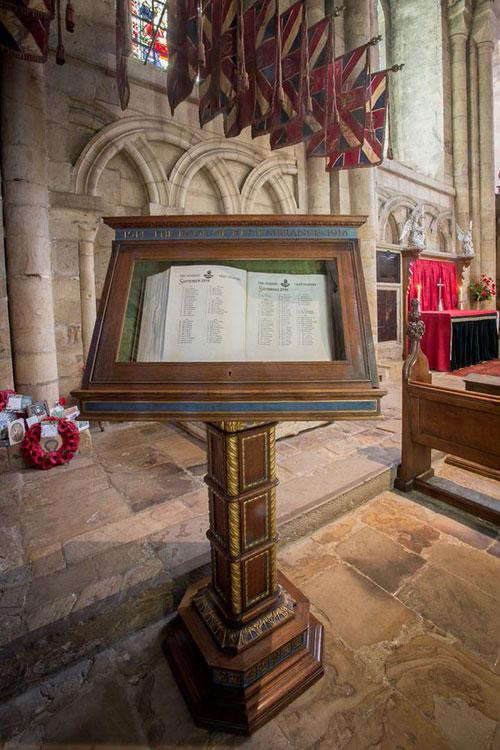
Today, the memory of those men continues to be preserved in places such as Durham Cathedral, where the Durham Light Infantry Chapel and Book of Remembrance stand as a lasting tribute to those who served and those who never returned.
Why The Somme Still Matters Today
The Battle of the Somme remains deeply woven into British remembrance culture.
It reminds us not simply of loss, but of the cost of service.
It reminds us that the freedoms many now take for granted were secured by generations who accepted burdens few of us can fully imagine.And it reminds us that remembrance is not about glorifying conflict. It is about recognising the people who stood in difficult places and fulfilled their duty, often knowing the personal cost could be immense.
Perhaps the Somme also teaches another lesson. Throughout history, warfare has constantly evolved faster than military institutions have adapted. In 1916, commanders failed to understand how trench warfare and machine guns had fundamentally changed the battlefield. Even today, modern conflicts continue to show that technology often changes faster than human decision-making can keep pace. The lesson remains painfully familiar.
Progress without understanding carries consequences.
Preserving Military History Matters
At Oaths of Allegiance, we believe military history deserves to be remembered properly.
Every generation inherits the responsibility to preserve the stories of those who served before them.
Whether through family history, military memorabilia, regimental traditions or simple acts of remembrance, keeping these stories alive ensures sacrifice is never forgotten.
As we mark 110 years since the opening day of the Battle of the Somme, we remember not simply a battle, but the men whose courage became part of Britain’s military history forever.
Their names remain recorded in memorials, regimental histories and places of remembrance across the country, including here in County Durham.
They shall grow not old, as we that are left grow old:
Age shall not weary them, nor the years condemn.
At the going down of the sun and in the morning
We will remember them.


Comments